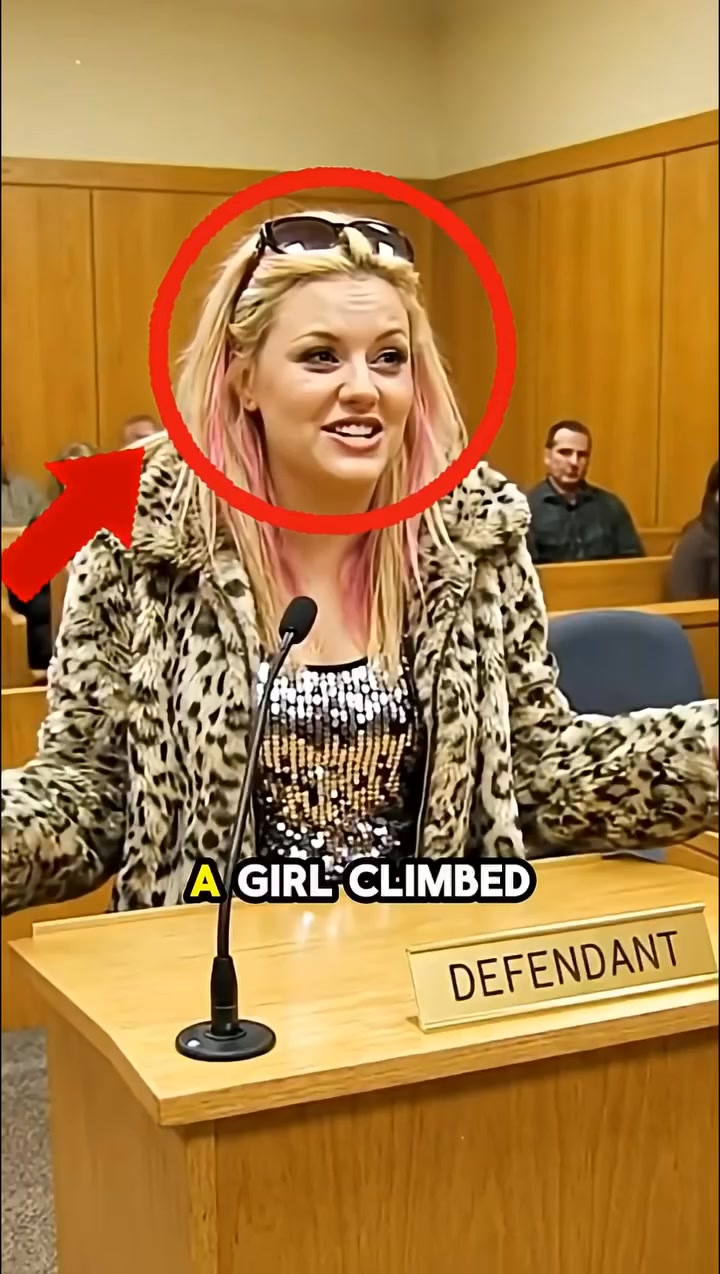
A moment of impulsive behavior captured for social media quickly escalated into a serious legal case when a young woman climbed onto the roof of a high-end parked vehicle to film a short video, ultimately causing visible damage and igniting a dispute over responsibility and respect for personal property.

What may have seemed like harmless entertainment in the moment soon revealed deeper issues surrounding entitlement, accountability, and the real-world consequences of careless actions.
The incident took place in a public setting where the luxury vehicle had been properly parked, its presence drawing attention not only for its design and value but also for becoming an unintended stage for an act that would later be scrutinized in court.
Without permission or consideration for the owner, the woman climbed onto the vehicle’s roof and began dancing, recording the act as part of a social media clip meant to entertain viewers.
While the performance itself may have appeared brief and spontaneous, the physical impact of standing and moving on the car’s roof resulted in noticeable damage, including dents that compromised the integrity and appearance of the vehicle.
What might have been dismissed as a fleeting moment of online content creation instead turned into a costly mistake, leaving the owner to deal with repairs and the emotional frustration of seeing their property mishandled.
When the matter reached the courtroom, the woman’s attitude became a focal point of the proceedings, as she downplayed the seriousness of her actions and expressed disbelief that the situation had escalated to legal consequences.
She argued that the reaction to her behavior was exaggerated, insisting that she had not intended to cause harm and that she did not believe the damage would be significant.

This response stood in stark contrast to the perspective of the vehicle’s owner, who emphasized the value of the car and the disrespect inherent in using someone else’s property without consent.
For the owner, the issue extended beyond the financial cost of repairs, touching on a broader principle of personal boundaries and the expectation that others will treat private property with care and consideration.
The case quickly evolved into more than a simple dispute over damages, becoming a reflection of how social media culture can sometimes blur the line between public and private spaces.
The act of creating content for online platforms, while widely accepted, raised important questions about where responsibility lies when such actions infringe upon the rights of others.
During the hearing, the judge addressed the situation with a clear and direct perspective, focusing on the fundamental issue at hand rather than the motivations behind the act.
The courtroom discussion highlighted the importance of understanding that public visibility does not equate to public ownership, and that the presence of an object in a shared space does not grant permission for its use.
In a firm statement that resonated throughout the proceedings, the judge reminded the defendant that the vehicle was neither a stage nor an object available for personal expression without consequence.