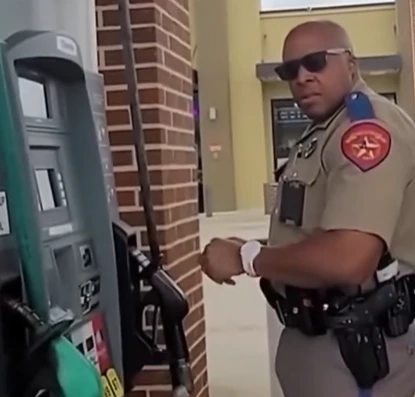
What began as an ordinary traffic enforcement operation soon developed into a situation that attracted widespread attention and sparked intense public discussion. A driver was reportedly stopped for traveling above the posted speed limit, but the encounter became far more complicated when the individual involved turned out to be a law enforcement officer.
Witnesses described the initial moments as routine. Officers conducting traffic monitoring observed a vehicle moving noticeably faster than surrounding traffic and initiated a stop. Situations like this occur every day across the country and rarely generate much attention beyond the people directly involved.
@drilliam.shakespeare Cop gets aggresive after being caught speeding #cop #police #speeding
However, according to reports, the atmosphere changed once the identity of the driver became known. The officer conducting the stop reportedly recognized that the individual behind the wheel was also a member of law enforcement, setting the stage for a tense exchange that would later become the focus of public interest.
Body camera footage and witness accounts suggested that the conversation quickly grew more heated than many expected. Questions were raised regarding whether professional courtesy should apply in such circumstances or whether all drivers, regardless of occupation, should be treated exactly the same.
As the discussion unfolded, both individuals appeared determined to defend their positions. The officer making the stop emphasized the importance of enforcing traffic laws consistently, while the driver reportedly challenged aspects of the situation and expressed frustration about being pulled over.
Observers noted that encounters involving public officials often receive greater scrutiny because they raise questions about accountability and fairness. Many people believe that those entrusted with enforcing laws should be held to particularly high standards when it comes to following them.
The incident soon spread across social media platforms, where clips and summaries generated thousands of comments. Some viewers praised the officer conducting the stop, arguing that equal treatment under the law is essential for maintaining public trust.
Others viewed the situation differently. They suggested that tensions may have escalated unnecessarily and argued that professional disagreements should be handled calmly and respectfully, especially when both parties understand law enforcement procedures.
Legal experts who commented on the incident pointed out that traffic stops can be stressful even for experienced professionals. Adrenaline, uncertainty, and public visibility can all contribute to heightened emotions during roadside encounters.
Former officers noted that being stopped by a fellow law enforcement professional can create unique challenges. Expectations, assumptions, and concerns about reputation may influence how individuals respond, even when the underlying issue is relatively straightforward.
As public debate intensified, attention shifted away from the speeding allegation itself and toward the behavior displayed during the interaction. Many viewers became interested in questions of professionalism, communication, and accountability rather than the original traffic violation.
Community leaders emphasized that public confidence depends not only on enforcing laws but also on how those laws are enforced. Respectful communication, transparency, and consistency are often cited as key elements in maintaining trust between law enforcement agencies and the communities they serve.
The department involved later acknowledged public interest in the case and indicated that the matter would be reviewed according to standard procedures. Officials stressed that internal evaluations help ensure that policies are followed and that any concerns are addressed appropriately.
Meanwhile, discussions emerged regarding the broader issue of speeding and road safety. Transportation experts noted that excessive speed remains a significant contributor to traffic incidents and continues to be a focus for enforcement efforts nationwide.
Road safety advocates argued that the incident highlighted an important principle: traffic regulations exist to protect everyone. Regardless of profession, status, or background, the risks associated with speeding affect all road users.
As media coverage expanded, commentators examined the different ways people interpreted the encounter. Some focused on the importance of holding public servants accountable, while others concentrated on maintaining professionalism during challenging interactions.
The situation also became a case study in how rapidly modern incidents can gain national attention. A brief roadside encounter that might once have remained local news became the subject of widespread debate within hours.
Experts in public communication observed that public perception is often shaped as much by behavior as by facts. How individuals respond under pressure can significantly influence how audiences interpret an event.
Throughout the discussion, one theme consistently emerged: accountability. Many citizens expressed the belief that fairness requires the same standards to apply to everyone, particularly those responsible for enforcing rules and regulations.
At the same time, others stressed the importance of avoiding quick judgments based solely on short video clips. They encouraged viewers to consider the full context before reaching conclusions about anyone involved.
As reviews continued, officials reiterated their commitment to transparency and professional conduct. They emphasized that public trust is strengthened when concerns are examined openly and policies are applied consistently.
For many observers, the most memorable aspect of the incident was not the speeding allegation itself but the conversation that followed. The exchange prompted broader reflection about authority, responsibility, and the expectations placed upon those who serve in public roles.
In the weeks following the incident, discussions gradually shifted from individual actions to larger questions about leadership and accountability. Community members, commentators, and law enforcement professionals alike found themselves debating how best to balance enforcement with professionalism.
Ultimately, the encounter served as a reminder that public trust is built through everyday actions. Whether during major investigations or routine traffic stops, the way people conduct themselves can leave a lasting impression.
What started as a simple roadside stop evolved into a widely discussed example of how quickly ordinary situations can become matters of public interest. While opinions varied, most agreed on one point: accountability, fairness, and respectful communication remain essential components of effective public service.
The incident may eventually fade from headlines, but the conversations it inspired about responsibility and equal treatment are likely to continue long after the traffic stop itself is forgotten.