The last normal thing I heard before the crash was my brother laughing about the kind of future that had always belonged to him.
Justin was driving, one hand on the wheel, the other tapping his phone every few seconds as new emails came in.
Three universities wanted him, he said.
One admissions dean had personally called.
My mother, seated behind us, sounded thrilled.
My father said a boy like Justin didn’t get opportunities like that by accident.
I sat in the passenger seat and watched the traffic light ahead turn green, trying not to feel like I was listening to a celebration I had never been invited to.
Then a horn exploded from the left.
Justin jerked his head up too late.
Tires screamed.
The car spun hard enough to wrench the breath out of me, and the side door folded inward with a sound like metal being torn by giant hands.
Glass shattered across my lap and face.
Heat, smoke, the bite of the seat belt, my brother shouting my name once, and then a flash of pain so blinding it erased everything else.
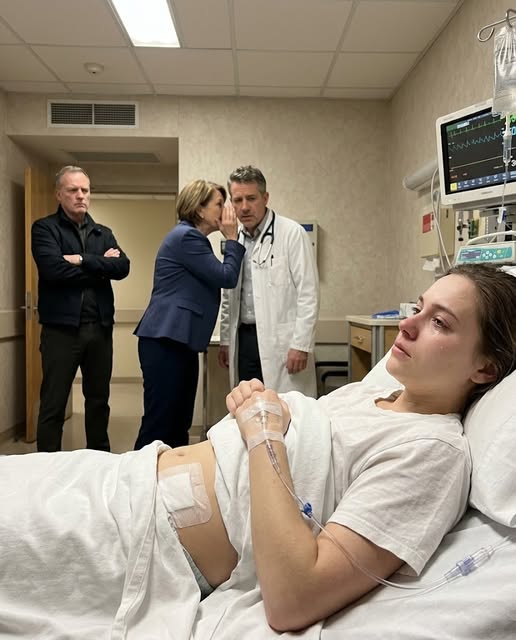
When I opened my eyes again, fluorescent lights buzzed above me.
My mouth was dry.
My right side felt hollow and burning at the same time.
A nurse with soft brown eyes leaned over me and said my name like she was trying to guide me back into my body.
Madison, you’re in County General.
You’ve had surgery.
Don’t try to move yet.
She adjusted my IV, checked the monitor, and gave me the kind of careful smile that belongs to people who spend their days standing between pain and panic.
The doctor came in with my parents only minutes later.
He explained that the crash had torn one of my kidneys beyond repair.
They had removed it to save my life.
I was stable, but recovery would be long.
The first thing I whispered was Justin.
My mother answered before the doctor could.
He’s fine, she said.
Just scratches.
Then she added, with more feeling than she’d shown about me, that the car was totaled.
Even drugged and drifting, I understood exactly where I ranked in her private math.
My father stood at the foot of my bed with his hands in his pockets.
He did not touch me.
He did not say he was glad I had survived.
He asked the doctor whether insurance usually covered this sort of surgery.
Over the next two days, my parents visited in brisk shifts.
They discussed liability, admissions deadlines, and whether the accident report could hurt Justin’s future.
Justin did not visit at all.
Every time the door opened and it wasn’t him, some hope in me shrank to a smaller, colder shape.
His absence would have been easier to excuse if it had not fit a pattern so old I could trace it back to childhood.
When I was seven, Justin dared me to climb the oak tree in our backyard because he said I was too scared to go higher.
I slipped, fell, and broke my arm.
My mother ran outside and checked his scraped knee before she looked at the bone jutting beneath my skin.
He was the child who had to be protected.
I was the child who should have known
better.
At twelve, I won first place in the regional science fair after weeks of staying up late over a project I had built from scrap parts and stubbornness.
My parents missed the ceremony because Justin had a banquet for student athletes.
My father told me not to act like it was the same thing.
Justin’s events mattered, he said.
Mine were nice.
The distinction stayed with me.
Justin was promise.
I was a pleasant side note.
By sixteen I was working after school and saving every check I could because community college was the only future I trusted enough to plan for.
When my mother suggested I help pay for Justin’s campus tours, she called it a family investment.
I said yes because I always said yes.
That had become my role in the Lawson house: be understanding, be flexible, be the one who could do with less.
I didn’t know then that training someone to disappear can look a lot like raising them.
The hospital made everything sharper.
Pain strips away the stories people tell to make cruelty sound reasonable.
Late on the third night, I drifted in and out of a medicated half-sleep when voices gathered outside my room.
My mother’s was low and controlled.
My father’s was quieter, but no less intent.
The doctor sounded guarded in the way good doctors do when they realize a family conversation is about to cross an ethical line.
Justin’s condition is more complicated than we first thought, the doctor said.
The trauma may have aggravated an underlying kidney disease that wasn’t diagnosed before the crash.
We’re bringing in a nephrologist.
My mother asked whether the transplant list could be expedited.
The doctor said no.
Then she asked whether my remaining kidney was viable.
My father, as calm as if he were discussing a tax problem, asked whether it could be transferred if I matched.
The doctor said that was not how any of this worked.
My mother replied that Justin had scholarships, opportunities, a future.
Madison has always been more delicate, she said.
Then, with frightening ease, she added that I was useless anyway.
My father completed it: just a burden.
I lay there motionless, eyes closed, and felt something inside me become impossibly clear.
They were not terrified and irrational.
They were practical in exactly the way they had always been practical, willing to strip value from one child to protect the other.
When the doctor said my consent would be required because I was an adult, my mother answered without hesitation.
She’ll agree.

I knew why she was so certain.
For twenty-two years, I had mistaken surrender for goodness.
The nurse returned shortly after midnight to check my temperature.
Her name badge said Elena Ruiz.
She took one look at my face and seemed to understand that pain was no longer the only thing wrong.
When she asked if I needed anything, I whispered, I need a patient advocate.
And I don’t want my parents making decisions for me.
Elena did not tell me to calm down or wait until morning.
She locked the wheels on my bed, lowered her voice, and said, Then let’s make sure that happens now.
Within half an hour, Dr.
Perez came back with a hospital social worker named Hannah Cole.
Hannah
pulled a chair close enough that I didn’t have to strain my voice.
She explained my rights carefully: no one could authorize a donation for me, no one could pressure me without that pressure being documented, and as soon as I designated another emergency contact, my parents could be limited as visitors.
I asked Dr.
Perez to note the hallway conversation in my chart.
His expression tightened, but he nodded.
He had heard every word.
That mattered more than I could describe.
Once the door was shut, Dr.
Perez told me the medical truth my parents had twisted.
Justin was not dying that night.
The crash had revealed signs of a congenital kidney disorder that might have taken years to diagnose otherwise.
He would need more testing.
He might face dialysis in the future.
He might eventually need a transplant.
But nothing about his condition justified what my parents had asked outside my room.
Their panic, Dr.
Perez said carefully, had outrun reality.
Hannah’s silence suggested she had another word for it.
I asked for the police report next.
Hannah said it would take time, but she could connect me with the officer assigned to the crash.
The next morning, while my parents were in the cafeteria, an officer named Ben Willis came by.
He asked whether I remembered anything from the moments before impact.
I told him about Justin checking his phone at the light.
Ben didn’t react, but he wrote it down.
Then he told me the traffic camera already showed enough to raise serious questions.
Justin had entered the intersection late and fast.
That afternoon I heard my father outside the room on his cell phone, trying to steer the narrative before it hardened into fact.
Keep it simple, he said.
Weather.
Blind angle.
Don’t use distracted driving unless you have to.
It was the same voice he used when correcting restaurant bills or negotiating service contracts.
My survival, my brother’s recklessness, my missing kidney, it all sounded like brand management to him.
Any lingering doubt I had about telling the truth vanished in that hallway.
I also needed someone in my corner who knew my family and would not be charmed by them.
So I asked Hannah to help me find my Aunt Elise, my mother’s older sister.
Elise had been pushed out of family gatherings years ago after one too many arguments about the way my parents treated me.
My mother called her dramatic.
I remembered her as the only adult who had ever looked at me and seen more than what I could be talked into giving away.
Elise arrived before sunset in jeans, rain-damp hair, and the kind of urgency no Lawson had ever shown on my behalf.
She crossed the room in three fast steps and held my hand so carefully that the kindness almost undid me.
She didn’t ask why I hadn’t called sooner.
She didn’t tell me family was complicated.
She just said, I’m here now.
When I told her what my parents had asked the doctor, something fierce moved across her face, but she kept her voice steady for me.
Then we do this properly, she said.
With Hannah’s help, I made Elise my emergency contact.
My parents would still be allowed brief visits unless I barred them completely,
but they would no longer be treated as default decision-makers if I became unable to speak.
That small administrative change felt enormous.
For the first time, the paperwork around my body matched the truth of my life: I did not feel safe in my parents’ hands.
Hannah also arranged for any medically sensitive conversations to happen only when I approved who was in the room.
Justin finally came the next morning.
He looked exhausted, pale under his usual confidence, but even then his first instinct was not confession.
It was persuasion.
Mom and Dad are panicking, he said, standing near the foot of my bed as if distance might protect him from what he’d done.
He told me everyone was under pressure, that I knew how hard he had worked, that nothing had actually happened with the organ issue, so maybe I shouldn’t make it worse.
I stared at him until the silence became unbearable.
Then I asked who caused the crash.
He swallowed and looked away.
I was checking an email, he said at last.
Just for a second.
The light changed, and I thought the lane was clear.
His voice shook then, but what he said next hurt more than the admission.
If things get bad with me, you’d help, right? You’re stronger than I am.
There it was, the family myth in one sentence.
He had almost killed me, hidden from me, listened while our parents discussed carving up what was left, and still believed my strength existed for his convenience.
I told him strength wasn’t the same thing as consent.
He had no answer to that.
My parents requested a family meeting the following day.
Hannah advised against doing it without staff present, so Dr.
Perez sat in, and Hannah took notes.
My mother opened with tears she had somehow found right on schedule.
She said they had been frightened, that any parent would say desperate things under stress.
My father called the hallway conversation unfortunate wording.
Justin sat with his hands clasped so tightly his knuckles were white.
Not once did any of them start with, We’re sorry you heard that.
They started with, You have to understand us.
Then my mother made the mistake of becoming honest again.
Justin’s future is different, she said.
He has opportunities you never wanted.
That isn’t cruelty, Madison.
That’s reality.
My father added that families make sacrifices for the member who can do the most good.
Hannah’s pen stopped moving for a second.
Dr.
Perez looked as though he wanted security before the meeting was over.
Justin finally spoke, barely above a whisper.
I need help.
In any other family, that sentence might have broken me.
In mine, it simply revealed who had been taught to ask and who had been trained to pay.
I waited until the room was completely quiet.
Then I told them I had heard every word outside my door.
I repeated my mother’s sentence exactly.
I repeated my father’s.
I watched the color drain from both their faces.
My mother tried to say she hadn’t meant it that way, but there was no other way to mean useless.
No other way to mean burden.
I told them the answer was no.
No, they could not have my kidney.
No, they could not use
my silence to protect Justin from the truth about the crash.
No, they could not call exploitation love because fear had made them sloppy.
When my father started to argue, Hannah cut in and reminded everyone that coercion would end the meeting immediately.
Dr.
Perez stated, in the flat tone of someone creating a record he expects to matter later, that I was refusing any discussion of living donation and that further pressure would be documented.
My mother burst into tears for real then, which might have moved me if I had not spent my whole life watching tears appear only when her control slipped.
Justin asked me once, softly, if I really meant it.
I told him I meant it more than anything I had ever said.
Security walked my parents out after my father called Hannah biased and accused the hospital of turning me against my family.
Justin left with them but turned once in the doorway, looking smaller than I had ever seen him.
That was the first moment he seemed to understand that consequences were not abstract things reserved for other people.
They had names.
They had scars.
They lay in hospital beds and refused.
I gave Officer Willis a full statement the same day.
I told him about Justin’s phone, the conversations about downplaying distracted driving, everything I remembered from the seconds before impact.
The investigation found him at fault.
Insurance became ugly.
My parents were furious, but their anger no longer carried the power of weather.
It was just noise outside a door I had finally learned to lock.
Recovery was slow.
I moved into Aunt Elise’s spare room after discharge because the thought of healing in my parents’ house made my skin crawl.
Elise drove me to follow-up appointments, cooked when I was too tired to stand, and never once made care sound like debt.
Physical therapy taught me how much the body remembers.
Counseling taught me how much the mind does.
Some days I mourned the family I wanted.
Other days I was simply relieved to stop pretending the one I had was something gentler than it was.
Justin’s situation worsened over the next several months.
He started dialysis.
His scholarship was deferred, not because I had told the truth, but because illness and the accident had changed the shape of his life.
My mother left voicemails calling me vindictive.
My father sent emails about family loyalty.
I did not answer.
About eight months later, Justin received a kidney from a deceased donor.
He survived.
The crisis that had supposedly justified taking from me ended without my body being offered up after all.
His apology arrived six weeks after his transplant in a letter, not a text.
He wrote that he had never asked them to speak about me that way, but he admitted he had lived off their favoritism for so long that he stopped hearing what it cost me.
He said he had spent most of his life believing I would always absorb the impact.
That sentence was the most honest thing he had ever given me.
I cried when I read it, not because it fixed anything, but because truth, even late truth, can still land like a bruise.
I did not go back.
I did not reconcile for
the holidays.
I did not accept my mother’s sudden desire to explain herself or my father’s stiff version of regret.
I started nursing school the following year, inspired in part by Elena Ruiz, the nurse who had looked at me in the middle of the worst night of my life and treated my fear like something real.
I wanted to become the kind of person who made other people feel defended in rooms where they were most vulnerable.
Sometimes I still touch the scar along my side and think about how close I came to losing more than an organ.
I nearly lost the final illusion that love, if endured long enough, eventually becomes safe.
What I learned instead was harder and cleaner.
Being useful is not the same as being loved.
Being needed is not the same as being valued.
And when people look at you in your weakest moment and see a resource instead of a human being, the kindest thing you can do for yourself may be the cruelest thing they have ever heard: no.
I still don’t know whether fear turned my parents into monsters that night or whether fear simply peeled back the last polite layer and showed me who they had been all along.
I only know this: the daughter they called a burden lived.
The daughter they thought would always agree learned how not to.
And sometimes, when I wonder who was truly lost in that hospital hallway, I think the answer was never me.